Small Business Loans Are Still Expensive in 2026 (Even as Rates Ease): What SMEs Can Actually Control
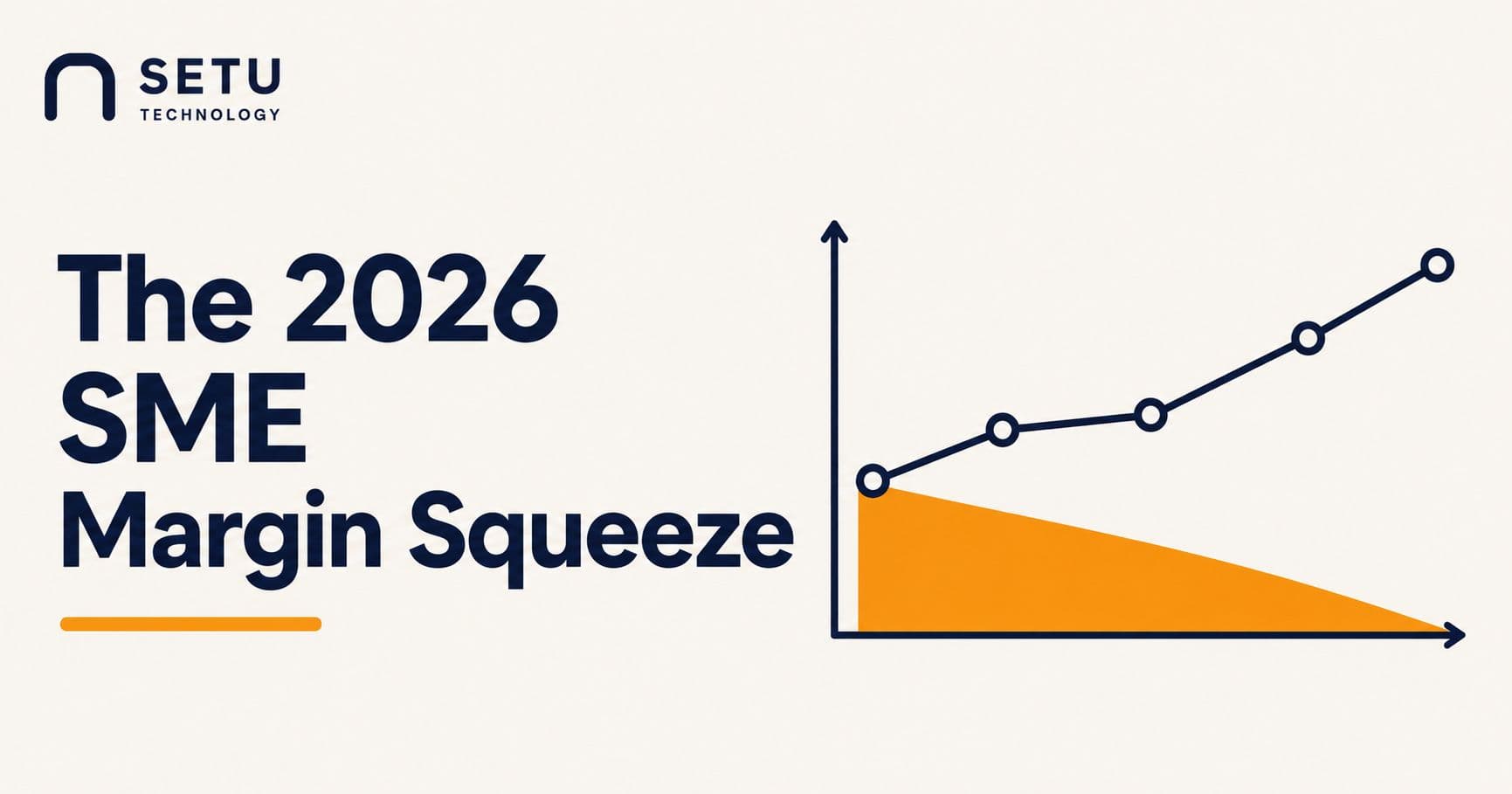
Central banks in several major economies have been easing policy rates through 2025 and into 2026, and the assumption for a lot of small business owners was simple: rate cuts flow through to loan pricing, so business borrowing should be getting cheaper. On the ground, that is not what most SMEs are actually experiencing. Recent OECD analysis on SME and entrepreneurship finance finds that while new lending to small businesses has begun to recover in some markets, the overall stock of SME loans remains broadly stagnant, and borrowing costs for SMEs remain high relative to pre-pandemic levels. Banks are still applying stringent lending terms amid ongoing economic uncertainty, even as headline rates fall. If your loan renewal quote this year did not feel meaningfully cheaper than last year's, that is not just your bank — it is the market.
Why SME Credit Is Still Stuck
The gap between policy rates and what an actual SME pays comes down to risk pricing, not just the base rate. Lenders price in a risk premium for small businesses that has not compressed as fast as benchmark rates have fallen, partly because loan books built during a higher-uncertainty period are still working through repayment stress. The practical effect is a lending environment where credit access is technically improving on paper — more approvals, more products, more fintech lenders entering the space — while the actual cost of that credit stays closer to where it was a year or two ago. For a business planning working capital or expansion financing in 2026, budgeting on the assumption that "rates are falling, so my loan will be cheap" is a real planning risk.
This also is not evenly distributed. A business with a strong banking relationship, several years of clean filings, and steady revenue is more likely to see pricing move with the broader rate environment than a newer business or one in a sector lenders currently consider higher-risk. That unevenness is part of why aggregate SME loan statistics can look like they are recovering while an individual owner's renewal quote barely moves — the average is being pulled up by borrowers who already had the strongest position to begin with, not by the market getting uniformly cheaper for everyone.
The AI Layer Banks Are Adding — and Why SMEs Don't Fully Trust It
Industry research on business banking trends for 2026 points to AI adoption, fintech-led personalisation and evolving digital experience as the dominant forces reshaping how banks serve small business customers — AI is increasingly embedded in credit assessment, customer support and cost control on the lender side. But the same research is clear that SME borrowers want transparency about how that AI is used, how their data is protected, and where a human is still checking the decision, not just a faster automated rejection or approval. If your bank or lender is leaning more heavily on automated underwriting this year, it is worth explicitly asking what data it draws on and whether a human reviews edge cases — a business with a thin or unconventional credit history can be disproportionately affected by a purely automated score.
What Actually Moves the Needle for Your Business, Right Now
Since rate relief is not doing the work for you yet, the controllable levers are on your side of the table. Clean, current cash flow records matter more to an underwriter — automated or human — than a polished pitch deck; a business with an up-to-date Cash Book and a Profit Dashboard showing real margins, not estimates, presents a materially lower-risk profile than one reconstructing numbers at application time. Lenders, whether reading a spreadsheet or feeding an automated model, are ultimately trying to answer the same question: does this business generate enough predictable cash to service the debt comfortably. A business that can answer that in seconds with current numbers is in a stronger position than one that needs a week to pull records together, regardless of how the underlying rate environment is moving.
Before applying, run the numbers you are actually requesting through Setu's Loan EMI Calculator so you know your real monthly obligation at the rate you are quoted, not the rate you assumed based on headline policy news. It is a five-minute check that tells you, before a lender does, whether the repayment actually fits inside your current cash surplus or whether you are borrowing against a hope that revenue grows fast enough to cover it.
A Simple Before-You-Apply Checklist
Reconcile your books to the current month, not last quarter — a lender (automated or human) trusts recent numbers far more than a reconstructed history. Know your actual monthly cash surplus before you commit to an EMI, not after; run the repayment figure through a calculator first, then check it against three to six months of real cash flow, not a single good month. Ask any lender using automated credit scoring what data it uses and whether a human reviews borderline cases, especially if your revenue is seasonal or your credit history is thin. Compare at least two or three lenders rather than accepting the first offer, since the gap between the best and worst quote for the same business can be wide in a market where pricing has not fully passed through rate cuts yet. And treat a rate-cut headline as a market signal, not a quote — confirm the number your specific business actually qualifies for before you plan a hire, an expansion, or a big purchase around it.
None of this closes the gap between falling policy rates and what SMEs are still paying to borrow — that gap is a market-wide condition, not something one business can fix on its own. But clean records, a realistic EMI number, and a little skepticism toward automated scoring are the levers that are actually in your hands in 2026, and they are worth using well before your next application, not after a rejection.
Frequently asked questions
OECD research on SME finance shows the overall stock of SME loans remains broadly stagnant and borrowing costs remain high relative to pre-pandemic levels, because lenders price in a risk premium that hasn't compressed as fast as headline policy rates have fallen.
More from Business Finance
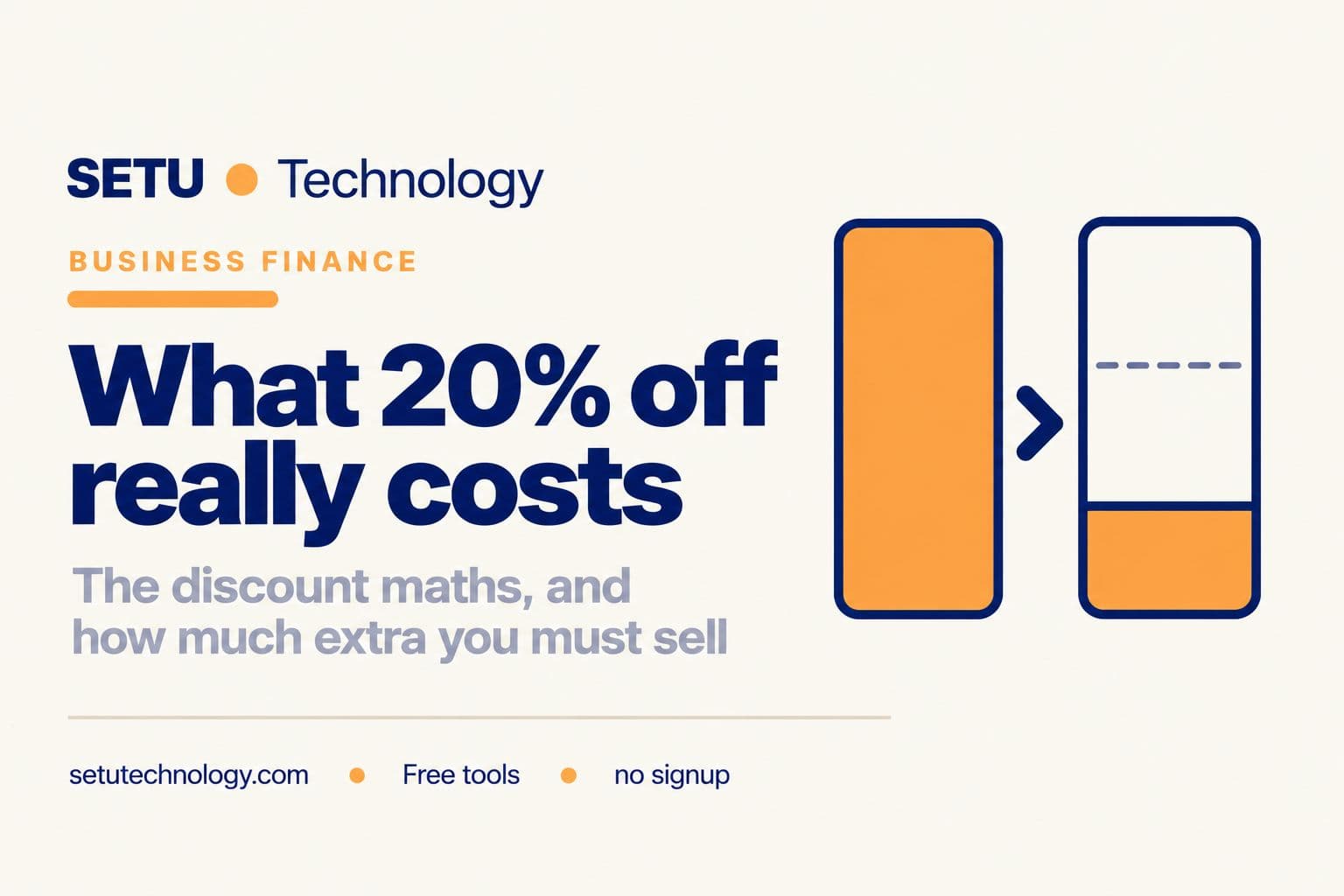
Discount Maths: What 20% Off Actually Costs You, and How Much Extra You Must Sell
A 20% discount on a 40% margin item does not cost you 20%. It halves your gross profit, and you need to sell twice as many units to stand still. Here is the arithmetic, the one formula worth memorising, and the three free calculators that do it for you.
Read more →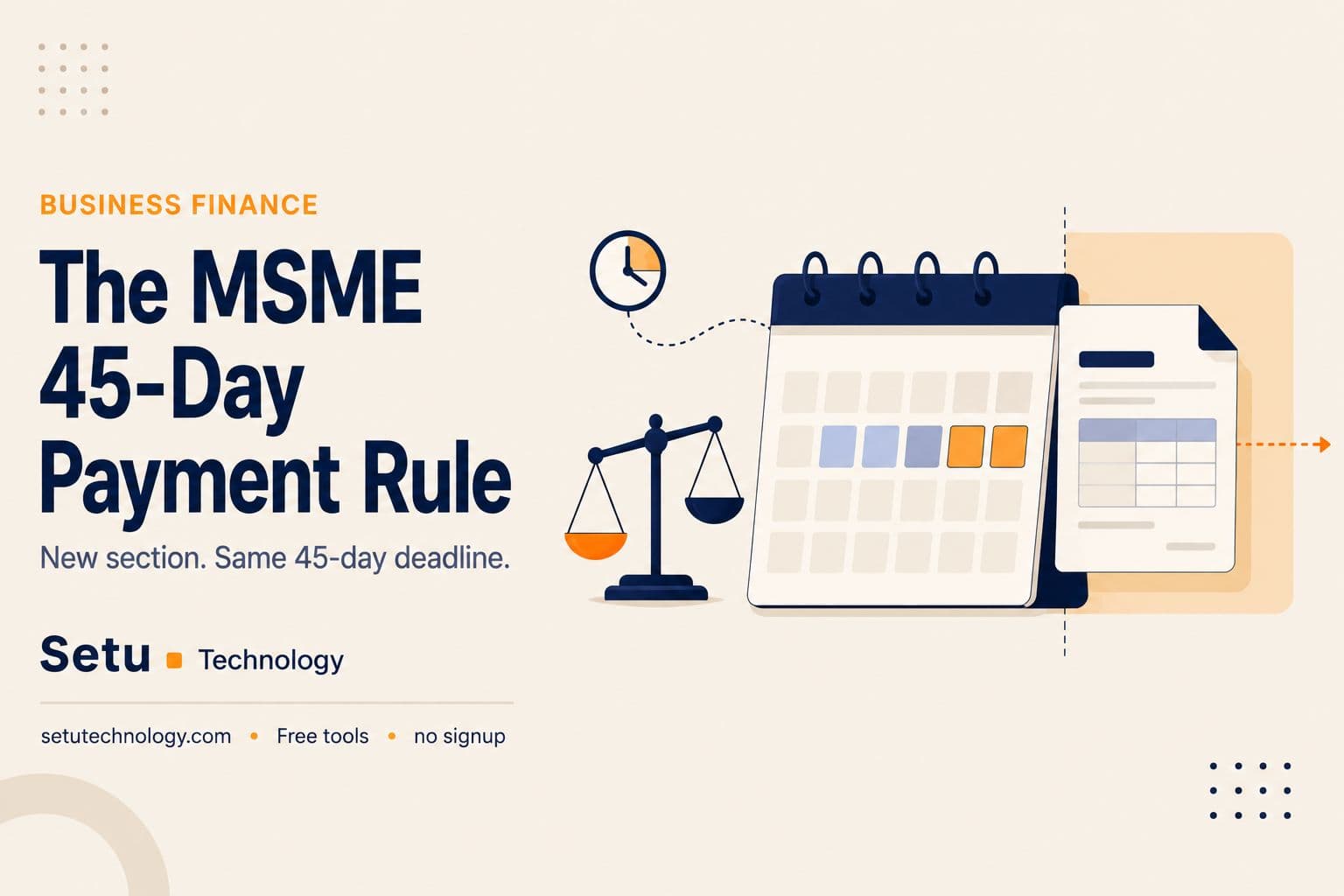
The MSME 45-Day Payment Rule in 2026: New Section, Same Deadline, Same Cash-Flow Squeeze
Section 43B(h) has moved into the Income-tax Act, 2025 as Section 37(2)(g) from 1 April 2026. The section number changed, the 15/45-day deadline did not — and for most SMEs this is a working capital rule wearing a tax rule's clothing.
Read more →
94% of Small Business Owners Expect Growth in 2026. Half of Them Can't Predict Their Own Cash Flow.
Small business optimism just hit an all-time survey high — 94% expect growth in 2026. At the same time, close to half still can't reliably predict their own cash flow. Here's what's driving the gap, and the habits that close it.
Read more →
Small Business Late Payments Hit a Record High in 2026: What $17.7K in Unpaid Invoices Is Actually Costing Owners
Nearly 3 in 5 small businesses now have invoices overdue by 30 days or more, up from under half last year. Here's what's driving the record, what it costs downstream, and the fixes the data says actually work.
Read more →