Cash Flow vs. Profit in 2026: Why a Profitable SME Can Still Run Out of Money
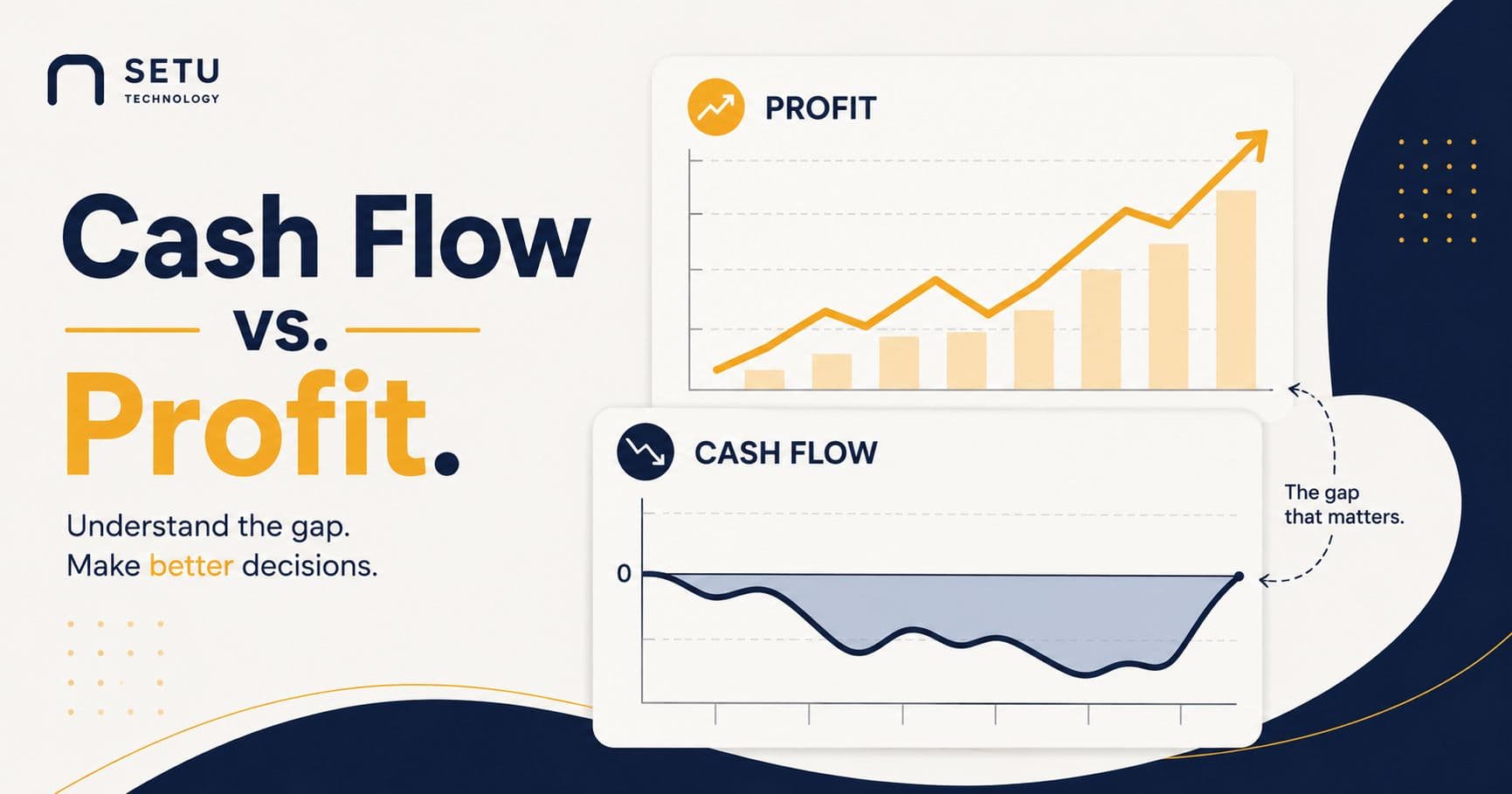
82% of small business failures cite cash flow problems as a key cause — not a lack of profit, not a bad product, cash flow. The median small business holds just 27 days of cash buffer, according to a JPMorgan Chase Institute analysis of transaction data across roughly 600,000 small business accounts, meaning if inflows stopped tomorrow, most businesses could cover about four weeks of outflows before real trouble starts. A business can be genuinely, provably profitable and still be one slow-paying client away from missing payroll.
Profit Is an Accounting Figure. Cash Is What's Actually in the Bank.
Profit is calculated on an accrual basis: revenue counts the moment it's earned, whether or not the customer has actually paid yet. Cash flow only counts money that has physically moved into or out of your account. The gap between the two is timing — and timing is where otherwise healthy businesses get caught. A large signed contract can make a quarter look excellent on the income statement while the business struggles to cover rent because the client's payment terms are 60 or 90 days out.
The Receivables Trap
This is the most common shape the problem takes. A business grows by selling more on credit terms — more invoices, bigger clients, longer payment cycles. Revenue climbs. But accounts receivable climbs faster than cash actually collected, because more of that growing revenue is sitting unpaid at any given moment. The business is profitable and expanding on paper while its bank balance quietly falls, and by the time anyone notices, the gap has usually been building for months. A single customer representing a large share of revenue and paying slowly makes the same trap worse — the business ends up financing that client's payment terms out of its own cash reserve without ever deciding to.
Inventory and Capital Spending Create the Same Mismatch
Two other patterns produce the identical timing gap. Inventory ties up cash the moment it's purchased, well before it's sold and converted back into revenue — a restaurant or retailer that stocks up ahead of a busy season can look cash-poor in exactly the weeks it looks busiest. And capital spending — a new outlet, new equipment, a system upgrade — hits the bank account immediately, while the returns it's meant to generate arrive gradually over the following months or years. None of these are mistakes on their own. They only become a crisis when nobody is tracking the gap they create.
The 27-Day Number Worth Actually Knowing
A useful way to think about cash buffer, drawing on Federal Reserve and JPMorgan Chase Institute data: under 13 days of buffer is a high-risk zone where any negative shock — a slow month, a late invoice, an equipment failure — can be genuinely fatal. 13–27 days is below median: functional, but fragile. 27–60 days is a healthier range for most service and retail businesses. None of this requires guesswork — it's a number every business can calculate from its own bank data at any point.
How to See the Gap Coming
The businesses that avoid the receivables trap aren't the ones that never grow — they're the ones that track cash and profit as two separate numbers, on a rolling basis, instead of assuming a profitable month means a healthy bank balance. A simple weekly habit does most of the work: check actual cash position against a rolling 90-day projection, and flag the gap the moment it widens rather than the month it becomes urgent. Setu's Profit Dashboard and Cash Book tools exist for exactly this — seeing cash and profit side by side instead of relying on the income statement alone. If you're planning growth that might create this exact timing gap, run the numbers first with the Break-Even Calculator.
Frequently asked questions
Profit is an accounting figure — revenue minus expenses over a period, recorded on an accrual basis, often including sales where no money has changed hands yet. Cash flow is the literal movement of money in and out of your bank account. A business can show strong profit on paper from a large invoiced sale while having no actual cash to make payroll until that invoice is paid.
More from Business Finance
The MSME 45-Day Payment Rule in 2026: New Section, Same Deadline, Same Cash-Flow Squeeze
Section 43B(h) has moved into the Income-tax Act, 2025 as Section 37(2)(g) from 1 April 2026. The section number changed, the 15/45-day deadline did not — and for most SMEs this is a working capital rule wearing a tax rule's clothing.
Read more →
Small Business Loans Are Still Expensive in 2026 (Even as Rates Ease): What SMEs Can Actually Control
Policy rates are falling in 2026, but most small businesses aren't seeing cheaper loans — OECD data shows SME credit stock is still stagnant and borrowing costs remain high. Here's why the gap exists and what's actually in your control.
Read more →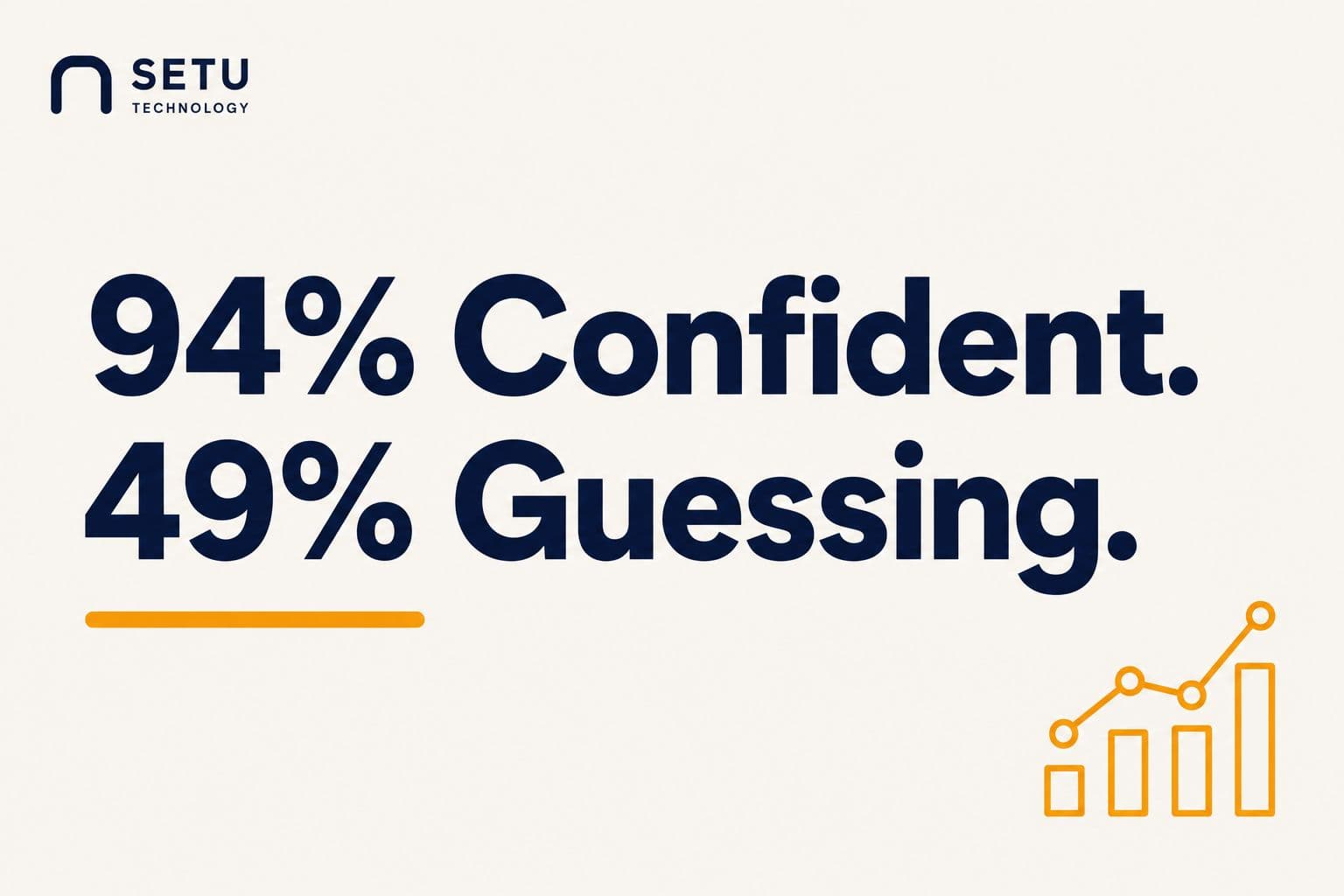
94% of Small Business Owners Expect Growth in 2026. Half of Them Can't Predict Their Own Cash Flow.
Small business optimism just hit an all-time survey high — 94% expect growth in 2026. At the same time, close to half still can't reliably predict their own cash flow. Here's what's driving the gap, and the habits that close it.
Read more →
Small Business Late Payments Hit a Record High in 2026: What $17.7K in Unpaid Invoices Is Actually Costing Owners
Nearly 3 in 5 small businesses now have invoices overdue by 30 days or more, up from under half last year. Here's what's driving the record, what it costs downstream, and the fixes the data says actually work.
Read more →