The Hidden Cost of a Free QR Menu in 2026: Every Price Change Means Reprinting Every Code
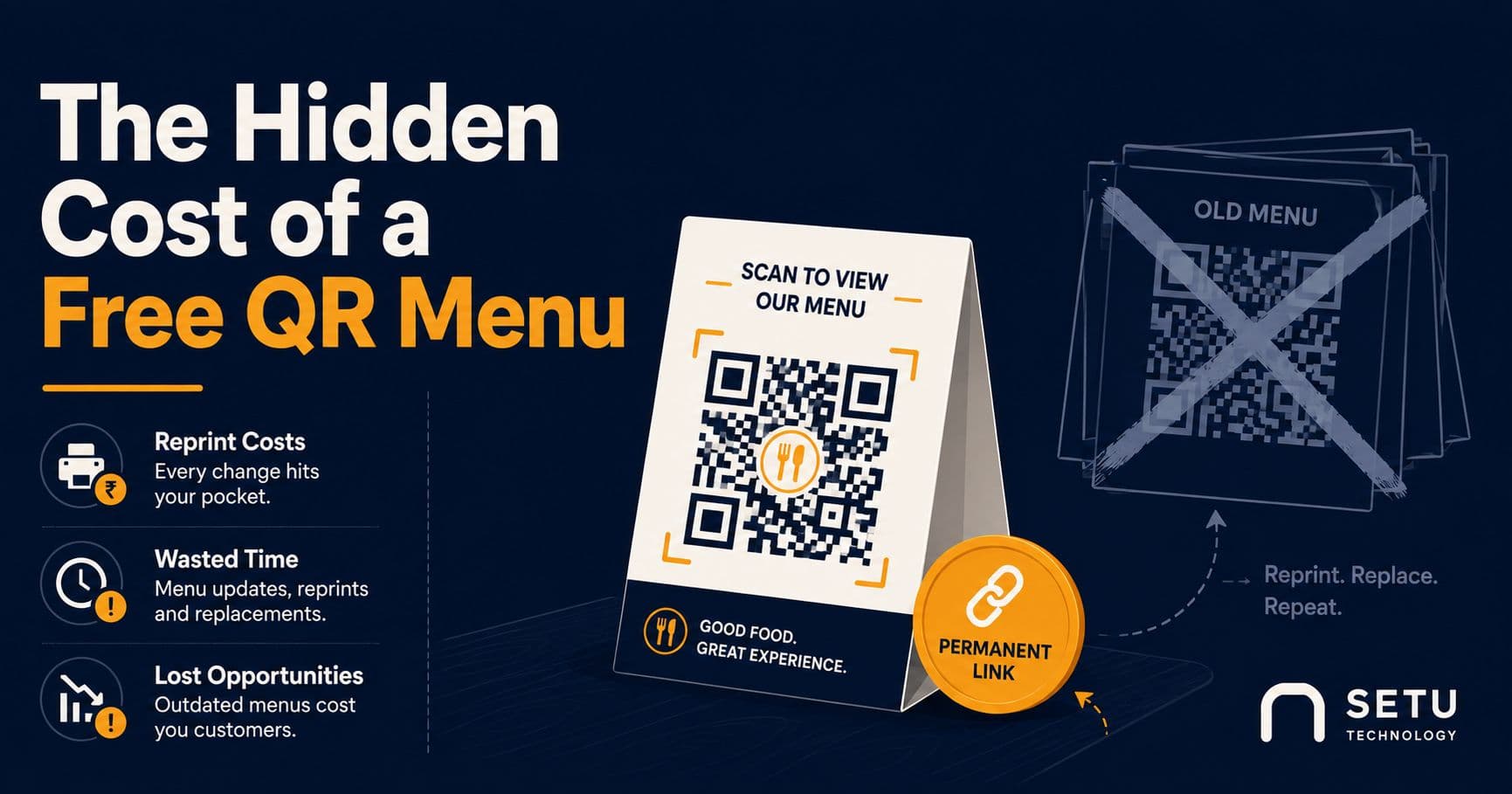
Tomato prices climbed 31% year-on-year in India through mid-2026, and edible oil and LPG moved a further 10% on top of that — which is exactly why restaurants that used to recost a dish once a year are now doing it monthly. That's the right move for protecting margin. It also quietly exposes a gap in one of the most common free tools a restaurant picks up early: a QR code that has the entire menu packed inside the code itself. Every time a price changes, the code changes with it — and every printed copy of that code, on every table, counter and delivery bag, is now showing the wrong price until someone reprints it.
Why a free QR menu breaks the moment a price moves
Setu's free QR Menu Generator works by compressing the whole menu — categories, dishes, prices, veg/non-veg tags — directly into the QR code image, with no hosting, no signup and nothing stored on a server. That's genuinely useful: there's no subscription, no link that can ever go dead, and the menu lives entirely in the restaurant's own browser. The tradeoff is structural rather than a bug — because the menu is the code, editing so much as one price produces a different QR code. The sticker on table 4 and the one taped to the counter don't update themselves.
The ceiling most restaurants don't see coming
There's a second limit that shows up as menus grow: the whole menu has to fit inside roughly 2,900 characters, which works out to somewhere between 60 and 100 dishes depending on how much description text each item carries. A short QSR menu never notices. A full-service restaurant with sizes, variations and descriptive copy on every dish can hit that ceiling faster than expected — and the fix, again, is a new code and a fresh reprint.
Why 2026's price volatility makes this bite harder
None of this mattered much when a menu got priced once at launch and left alone for a year. In 2026, with ingredient costs this volatile, that's no longer how a well-run kitchen operates — recipe costing has become a monthly discipline for anyone tracking tomato, edible oil and LPG closely, and pricing follows the recosting. The more often a restaurant recosts and reprices — which is exactly the right habit this year — the more often a menu built on a self-contained QR code needs every physical copy replaced. A free tool that costs nothing to use can still cost real time and reprinting effort every single time the numbers move.
What a permanent-link QR code changes
The premium QR Menu flips the structure around: the printed code holds a short, permanent link, and the actual menu lives online where it can be edited any time. Change a price at 11pm and the table tents printed months ago are already showing it correctly — nothing to reprint, no new code to generate. That structural change also removes the size ceiling entirely, since the code only ever needs to carry a link, not the menu itself, which opens up dish photos, sold-out toggles, size and variation options, multiple menus (lunch, dinner, a seasonal card) that can be swapped without touching the printed code, and daily scan counts to see whether the table tents are actually getting used.
A simple way to know which one you need
The free tool is still the right starting point for most restaurants, and Setu keeps it free with no catch — not a trial, not a lead-in with a countdown. The signal to move up isn't the tool being free or paid, it's how often reprinting is actually happening. A menu that hasn't changed in months has no reason to switch. A menu getting repriced monthly because of ingredient swings, or one that's outgrown the 60–100 dish range, or one where photos and sold-out toggles would genuinely help conversion, is exactly the case the permanent-link version was built for.
Moving up doesn't mean starting over
Restaurants already using the free QR Menu Generator don't lose that work when they upgrade — pasting the free tool's menu link into the premium editor carries across the dishes, tagline, phone number, address and brand colour already set up, so switching is a five-minute step rather than a rebuild. And every restaurant that signs up gets the premium version free for a full 12 months, every feature included, no card required. After that first year it settles at ₹49 a month or ₹499 a year in India (roughly two months free on the annual plan), or $0.99 a month or $9.99 a year outside India.
Where this fits with the rest of your menu discipline
A QR code is only as accurate as the price behind it, and getting that price right in the first place is the harder half of this problem — which is exactly what recosting a dish properly in 2026 is about. Once the numbers are right, the QR code should be the last thing standing between a price change and a customer seeing it correctly — not a reason to put off a reprice you know you need to make.
Start free with the QR Menu Generator — no signup, no hosting, nothing to expire. When reprinting starts costing more than it saves, move up to QR Menu, free for your first year.
Frequently asked questions
Setu's free QR Menu Generator compresses the entire menu into the QR image itself, so there's no hosting or link to maintain — but it also means a different QR code is generated every time a price or dish changes, and every printed copy on tables, counters and delivery bags becomes outdated at once.
More from Menu Ops
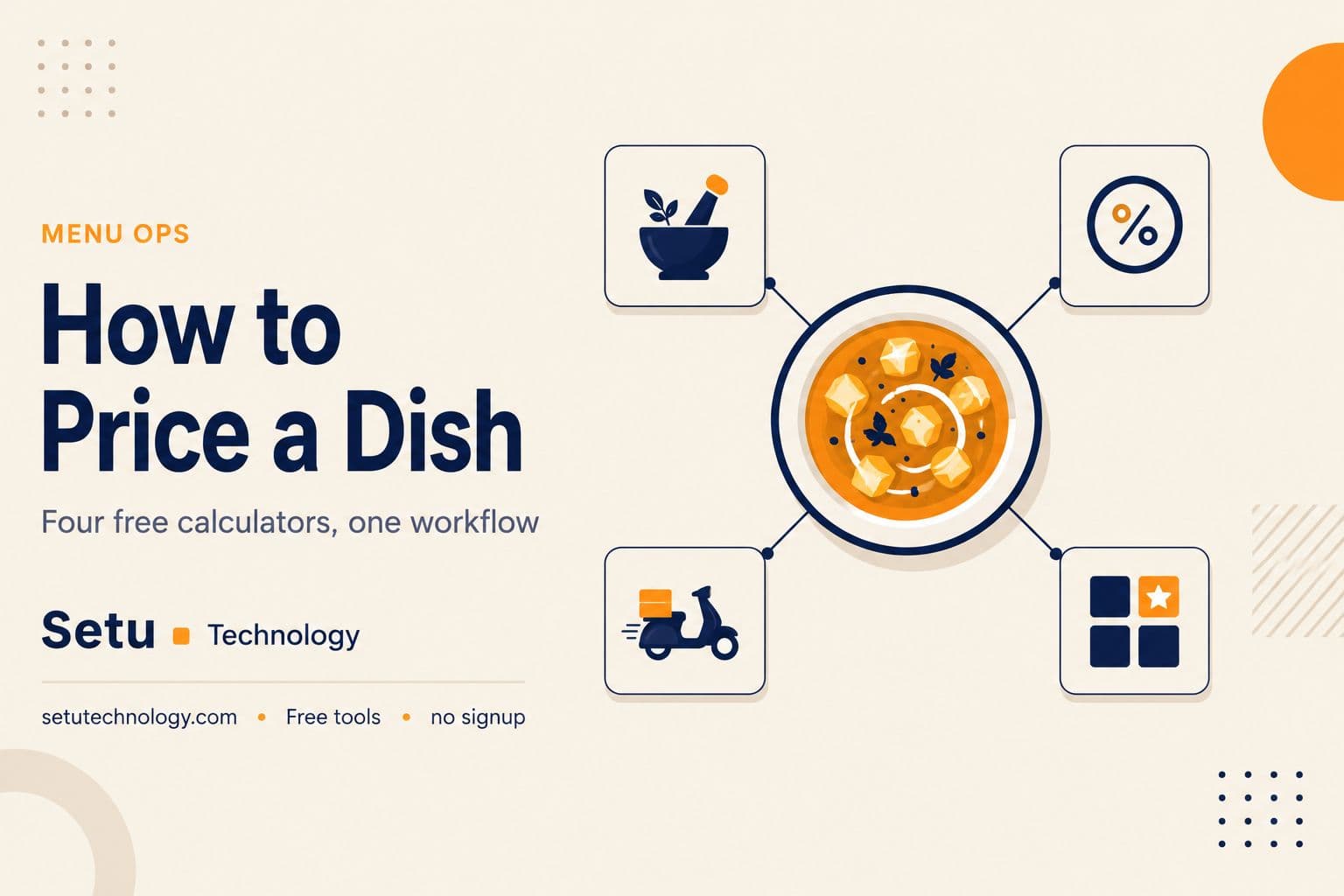
How to Price a Dish in 2026: Four Free Calculators, One Workflow
Most menu prices are set by copying the restaurant down the road or multiplying ingredient cost by three. Here's the four-calculator sequence that tells you why a price works — costing, food cost, aggregator pricing and menu engineering.
Read more →
MenuTiger Charges $17/Month for a QR Code Menu. Here's What You Get for Free Instead.
MenuTiger's free plan gives you 49 items and 200 orders before it pushes you to a $17/month plan. Setu's QR Menu Generator skips the hosting entirely — the whole menu lives inside the QR code itself. Here's an honest comparison of what each actually does.
Read more →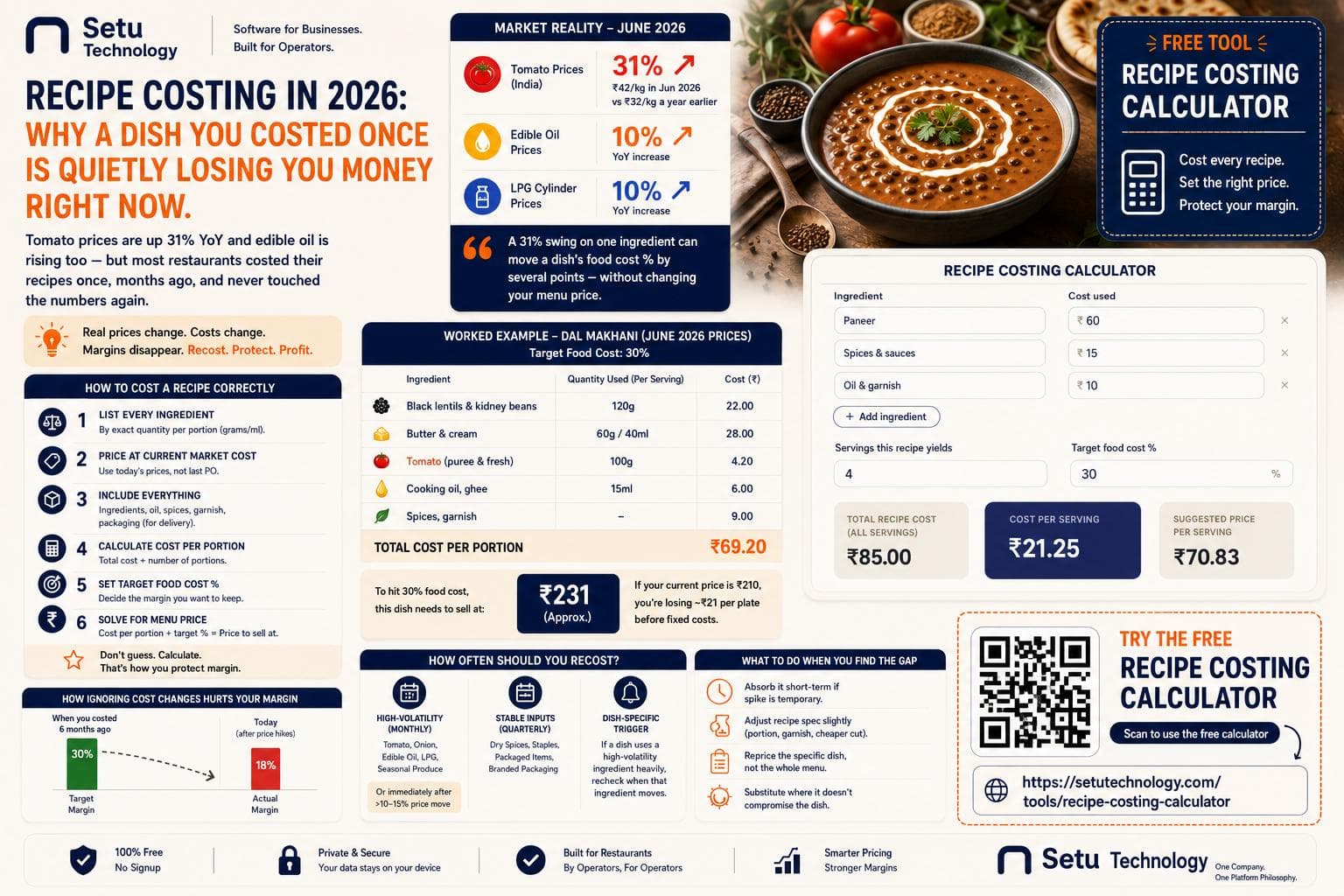
Recipe Costing in 2026: Why a Dish You Costed Once Is Quietly Losing You Money Right Now
Tomato prices are up 31% year-on-year and edible oil is climbing too - but most restaurants costed their recipes once, months ago, and never touched the numbers again. Here's how to fix that.
Read more →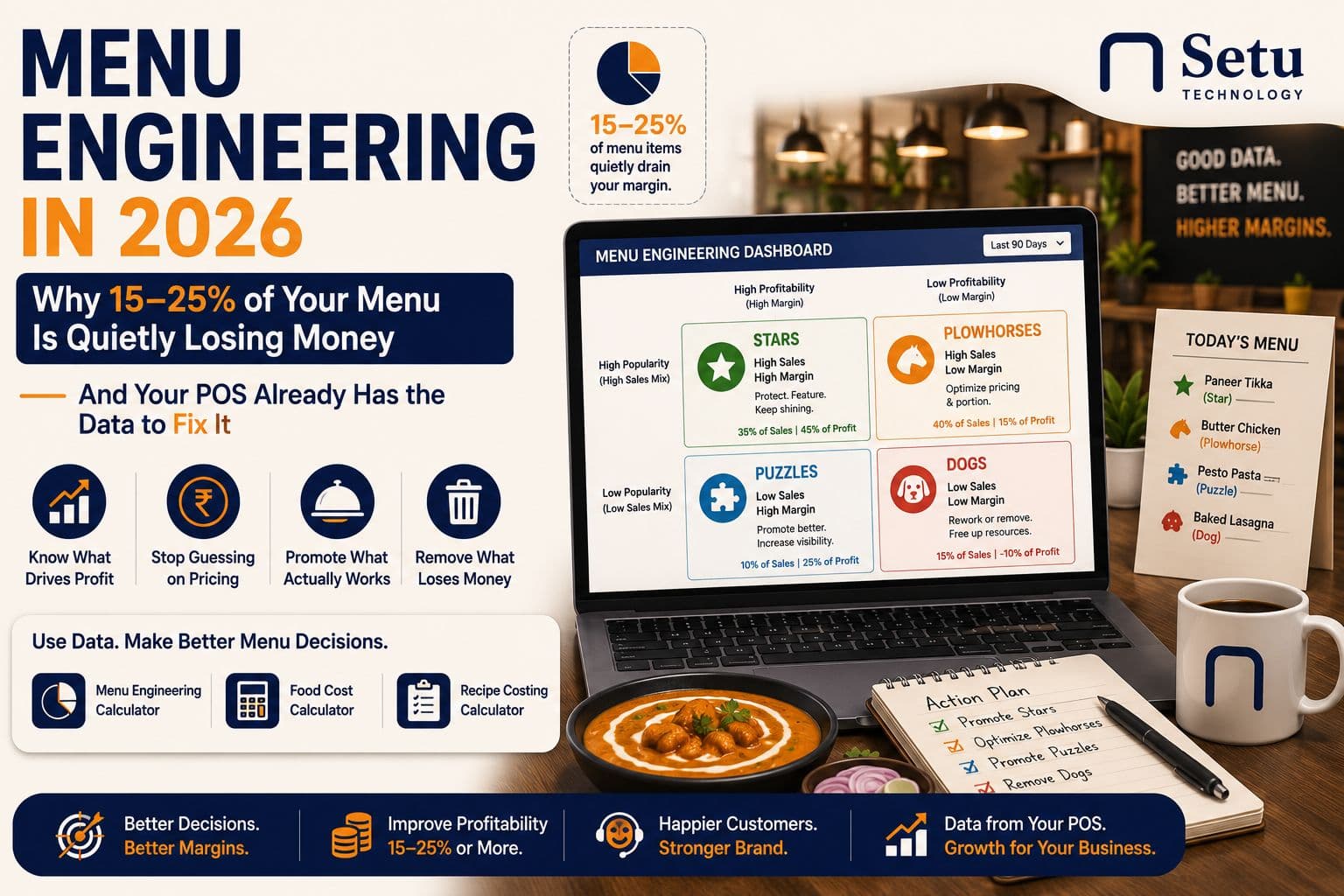
Menu Engineering in 2026: Why 15-25% of Your Menu Is Quietly Losing Money (And Your POS Already Has the Data to Fix It)
Most restaurant owners can tell you their bestseller. Almost none can tell you which items are actually profitable. Here's how to use POS sales data to run real menu engineering in 2026 — and stop guessing at pricing.
Read more →