Payroll Compliance Just Got Harder in 2026: What Outsourcing Actually Buys You
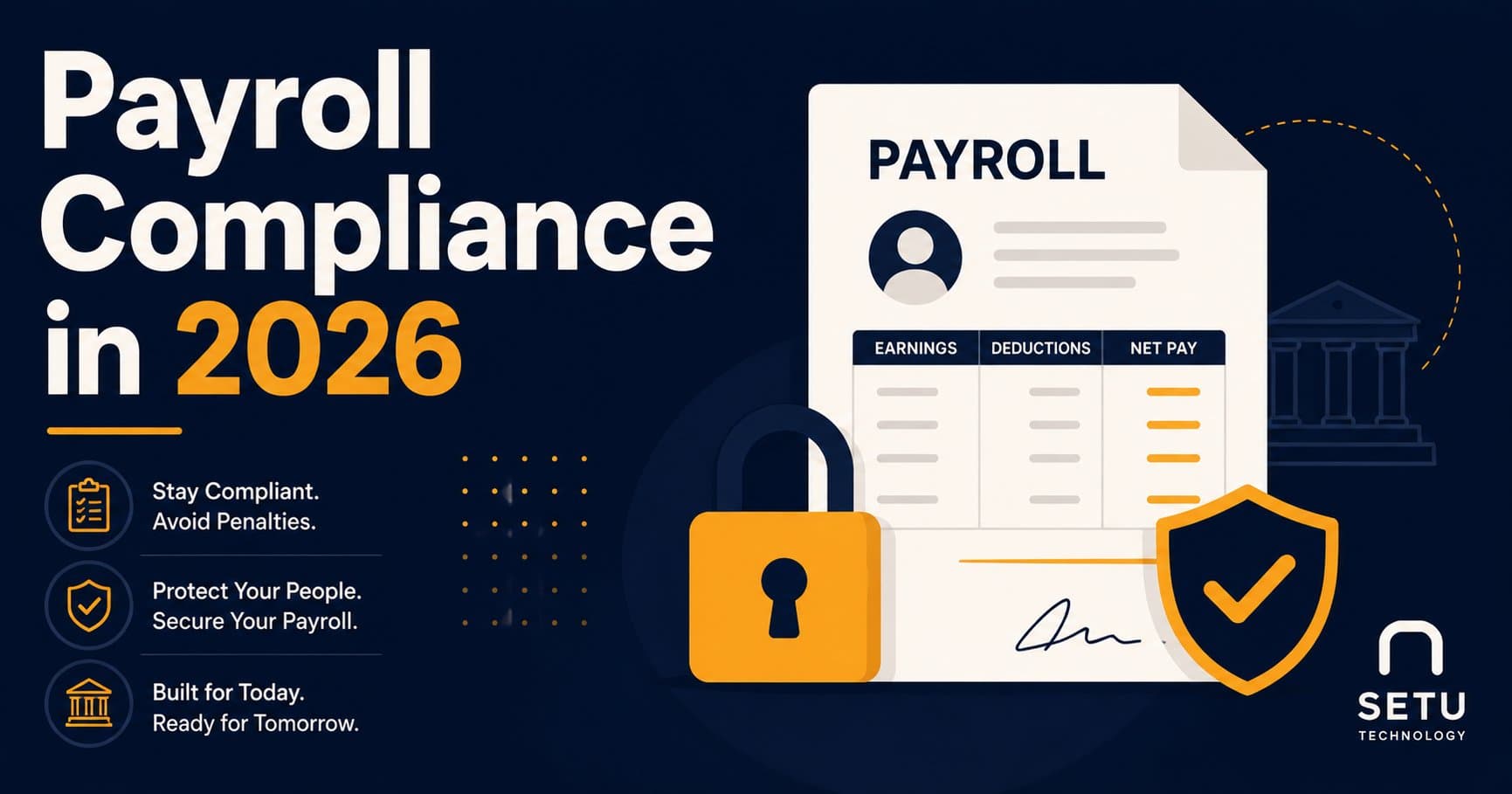
The average cost of payroll noncompliance now runs past $845 per employee, per year, once fines, back wages, penalties and internal remediation are counted. That's not a one-off penalty for a single missed filing — it's the going rate for treating payroll as a background task in a year when governments on both sides of most borders are tightening reporting standards, expanding what counts as protected employee data, and mandating far more detailed pay disclosure than employers have had to produce before. By most measures, 2026 is the most complex year yet for payroll compliance, and none of it is theoretical — it's already-finalized legislation and active enforcement.
What actually changed this year
In the US, new OBBBA reporting requirements expand what has to be captured on a W-2 well beyond the old broad buckets of "wages" and "tips." Tip income, shift differentials, overtime premiums and specific bonus categories now each need their own accurate classification, and fringe benefits — transportation, tuition assistance, wellness stipends — are seeing sharply increased scrutiny, with automated cross-checking between employer filings and employee tax returns catching mismatches faster than in past years. Manual earnings-code mapping was always a little risky. In 2026 it's a genuine liability, especially for any employer running payroll across more than one state.
Payroll data is now privacy data, not just payroll data
The bigger shift may be quieter: states including California, Colorado and Virginia now treat payroll records as protected personal information, with more states expected to follow. That means retention limits, employee access rights to their own records, encryption standards and vendor-risk assessments on whoever processes payroll on your behalf — obligations that used to sit purely with HR now sit across HR, finance, IT and legal. Enforcement isn't hypothetical either: recent privacy penalties have run $2,500 to $7,500 per affected individual, and a payroll file with a few hundred names on it turns a single lapse into a genuinely large number fast.
Pay transparency and e-filing are tightening at the same time
Salary-range disclosure laws, already active in states like California, New York and Washington, are expanding to more states and, in some cases, to internal promotions and transfers — and every one of those disclosures has to match what payroll is actually paying out, or it becomes evidence in a dispute rather than a compliance checkbox. Alongside that, mandatory e-filing thresholds are dropping, pulling more small and mid-sized employers into digital reporting with built-in validation, and penalties for late or inaccurate filings can now reach hundreds of dollars per form, with real-time IRS discrepancy-checking closing the gap between a mistake and someone noticing it.
What this means if you're still running payroll on a spreadsheet
None of these changes are things a small business can reasonably track by hand alongside actually running the business. A payroll spreadsheet that worked fine when the rules were "calculate correctly and file by the deadline" doesn't hold up against classification-level reporting codes, state-specific privacy obligations, and near-real-time validation on the other end. This is the same lesson the accounting side of this problem already learned in 2024, when a major bookkeeping platform's collapse left thousands of small businesses locked out of their own financial records overnight — the fix there wasn't avoiding outsourcing, it was making sure whoever does the work operates inside software you actually own and control, not a closed system only they can access.
What outsourcing payroll actually buys you here
The value isn't just handing off a task you don't enjoy. A payroll provider whose whole job is tracking this regulatory shift runs automated earnings-code mapping instead of manual entry, has data-retention and encryption practices already built to the newest state privacy standards, and watches e-filing threshold and penalty changes as they happen rather than finding out at year-end. That's the gap that actually costs money when it's missed — not the payroll run itself, which was never the hard part.
If you're running payroll out of India
The specifics differ but the shape of the problem doesn't: gratuity obligations under the Payment of Gratuity Act, PF and ESI contributions, and TDS on salaries all need to be calculated correctly and reconciled against what's actually disbursed, not estimated once and left alone. A quick check against a gratuity calculator or take-home salary calculator before a payroll run goes out catches the same kind of error a US employer would catch by checking a classification against a new reporting code before filing.
A short checklist before choosing a payroll provider
- Does the provider work inside payroll and accounting software you own, or a closed platform only they control?
- Can they show you how earnings codes and classifications are mapped automatically, not manually?
- What are their data-retention, encryption and access-control practices, in writing?
- Do they proactively flag state-specific pay transparency and e-filing changes, or wait for you to ask?
- What's their track record and response time when a filing deadline or a classification question comes up mid-cycle?
This is close to how Setu's own accounting, bookkeeping and payroll team works — inside a client's own QuickBooks, Xero, Zoho Books or Wave account, on a cadence that fits the business, with a person checking the classification-level detail before anything goes out. If you're also weighing outsourced bookkeeping against hiring in-house, we broke down the real cost math on that decision separately, including the lock-in risk most comparisons skip.
See what's included in Setu's accounting, bookkeeping and payroll services →
Frequently asked questions
In the US, new OBBBA reporting rules expand W-2 detail well beyond broad wage and tip categories, more states now treat payroll records as protected personal data, salary-range disclosure laws are expanding, and mandatory e-filing thresholds are dropping with real-time IRS validation catching errors faster.
More from Accounting
Are Your Books Audit-Ready? A Year-End Checklist for FY 2025-26
Tax-audit returns are due 31 October 2026 and GSTR-9 by 31 December 2026, but the work that makes those filings painless happens now. Here's a year-end checklist to get FY 2025-26 books audit-ready — and an honest note on when to outsource the cleanup.
Read more →
The 5-Day Month-End Close: A Checklist for Small Businesses in 2026
Most small businesses don't have a slow month-end close — they have no close at all, and the March numbers arrive in June. Here's a five-working-day version you can run with free tools, and the point at which handing it over makes more sense.
Read more →
Why SMEs Are Outsourcing Payroll in 2026 (Not Bookkeeping — Payroll)
Everyone talks about outsourcing bookkeeping. The bigger shift in 2026 is payroll — 73% of organizations now outsource at least one payroll activity, and small businesses are adopting faster than large enterprises. Here's why, and what it actually costs both ways.
Read more →
Bank Reconciliation Checklist for Global SMEs in 2026: The Monthly Habit That Catches Fraud Before It Compounds
Bank reconciliation looks like busywork until the month it catches a forged check or a duplicate charge. Here's the checklist that actually protects an SME's cash position — and why the person doing it matters as much as the process.
Read more →